Deducting Software, Subscriptions and Equipment (Section 179 Basics)
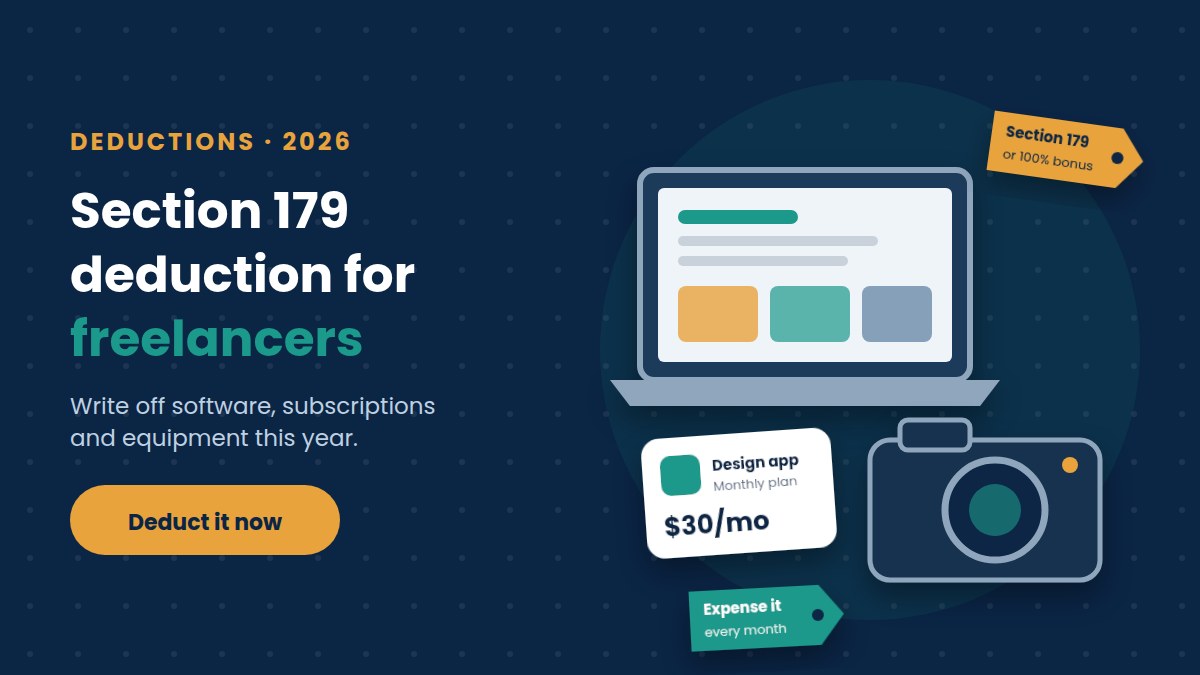
Section 179 deduction for freelancers: a laptop and camera tagged for Section 179 or bonus depreciation, and a $30 monthly app subscription tagged as an expense

The Section 179 deduction for freelancers lets you write off the full cost of business equipment in the year you start using it, instead of spreading it over several years. Software subscriptions are even simpler: they’re ordinary expenses you deduct as you pay them. And items up to $2,500 each can usually be deducted right … Read more
How to Calculate Quarterly Taxes With Irregular Income

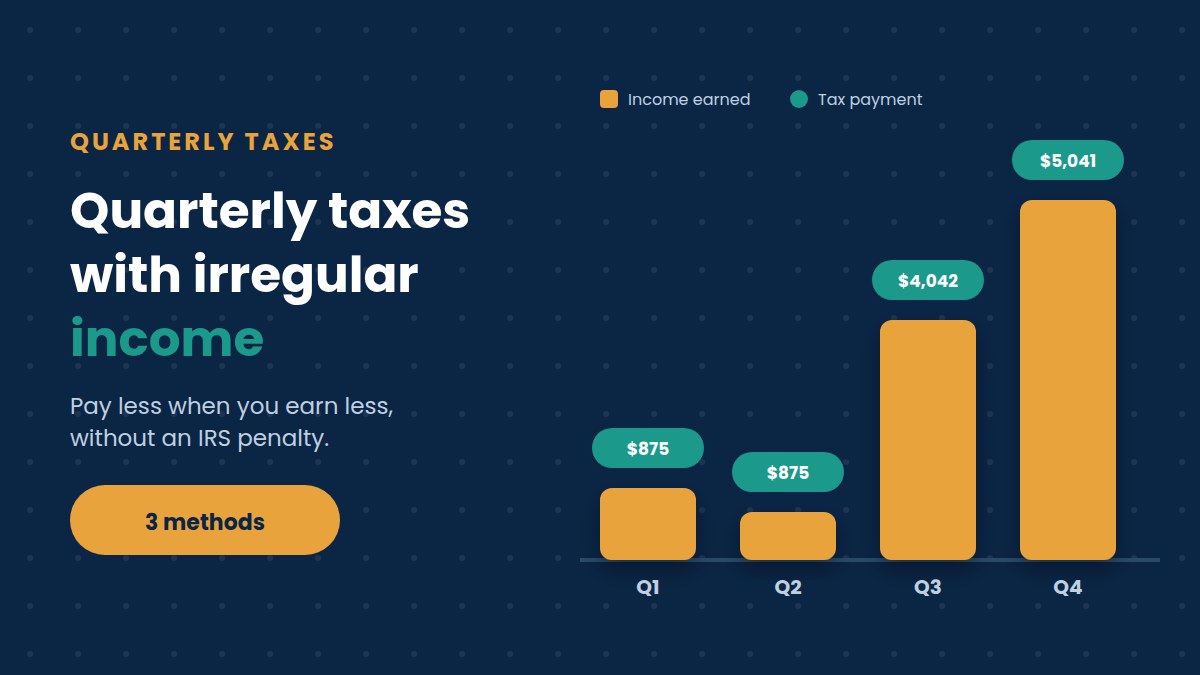
Quarterly taxes with irregular income: uneven income bars for each quarter with matching tax payments of $875, $875, $4,042 and $5,041

Paying quarterly taxes with irregular income is easier than it looks. You don’t have to split your tax into four equal payments. Instead, you can pick one of three IRS-approved methods: pay a fixed amount based on last year, pay a share of whatever you earn each quarter, or use the annualized income method to … Read more

Underpayment Penalty Calculator: What Missing a Quarter Costs You

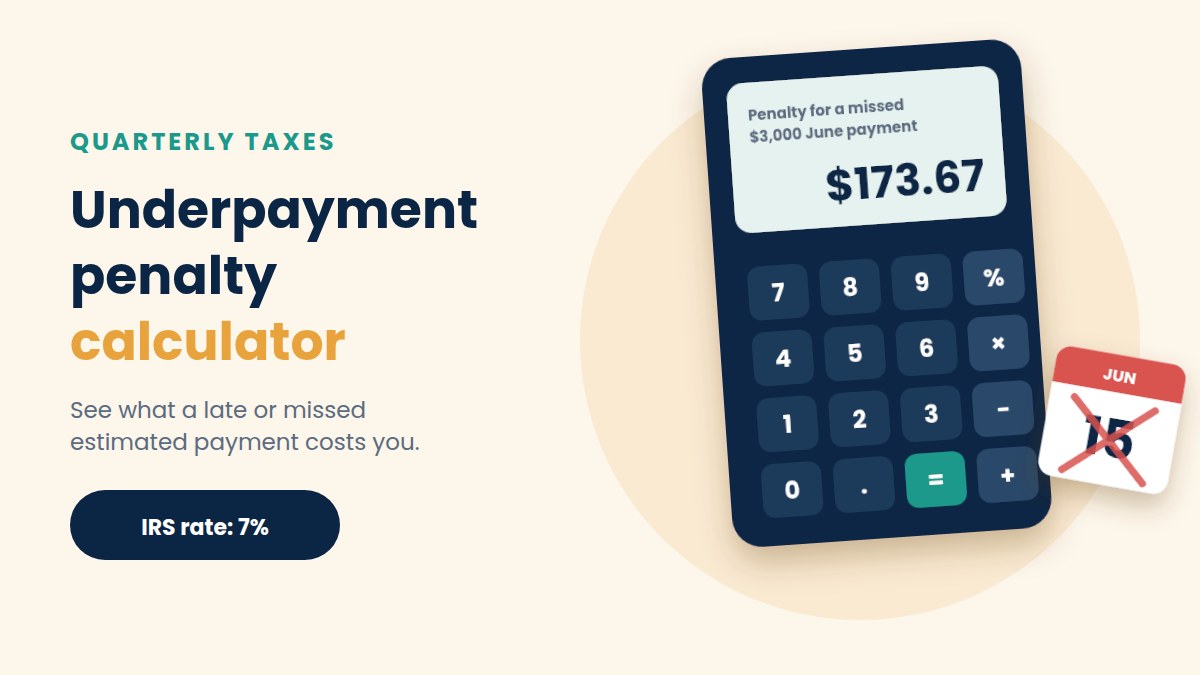
Underpayment penalty calculator showing a $173.67 penalty for a missed $3,000 June payment, next to a crossed-out June 15 date

Use this underpayment penalty calculator to see what a late or missed estimated tax payment will cost you. The IRS penalty works like interest. For 2026, it runs at 6% to 7% a year on the amount you underpaid, for each day it was late. Missing a $3,000 payment in June and paying it with … Read more

Self-Employed Health Insurance Deduction Explained

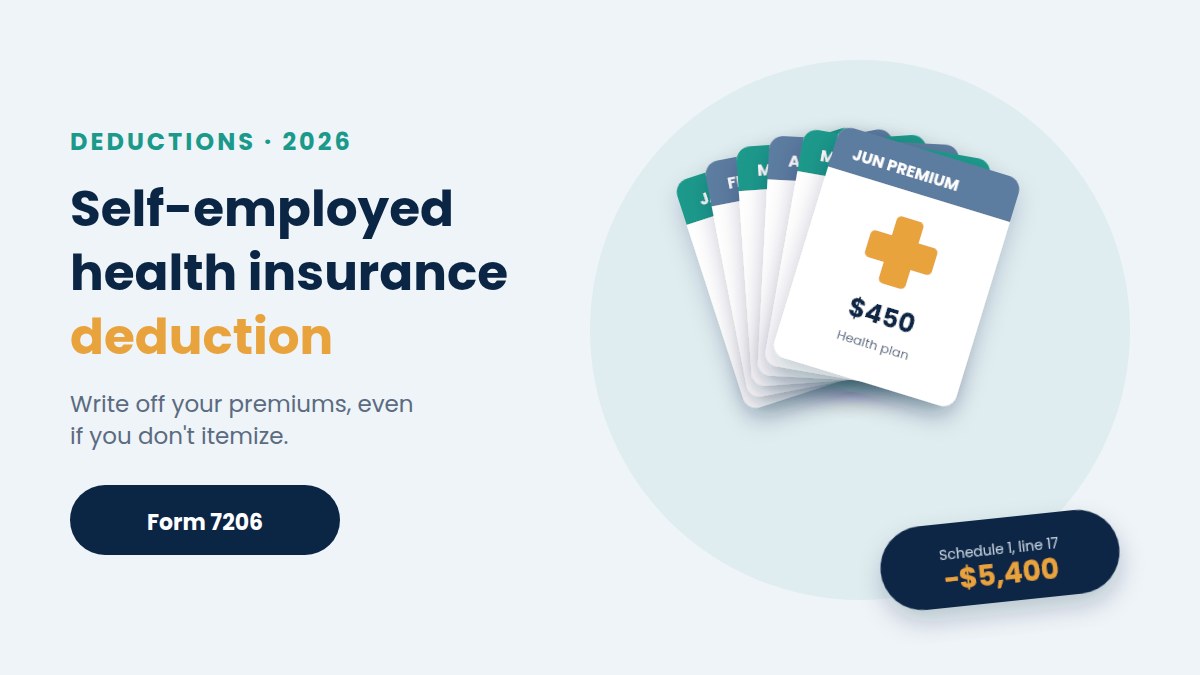
Self-employed health insurance deduction: a fan of $450 monthly premium bills and a $5,400 deduction on Schedule 1, line 17

The self-employed health insurance deduction lets you subtract the health insurance premiums you pay from your income. You take it on Schedule 1 of your Form 1040, so you get it even if you don’t itemize. It’s one of the most valuable freelancer tax deductions, because health coverage is often a freelancer’s biggest monthly bill. … Read more

Best Solo 401(k) Providers Compared

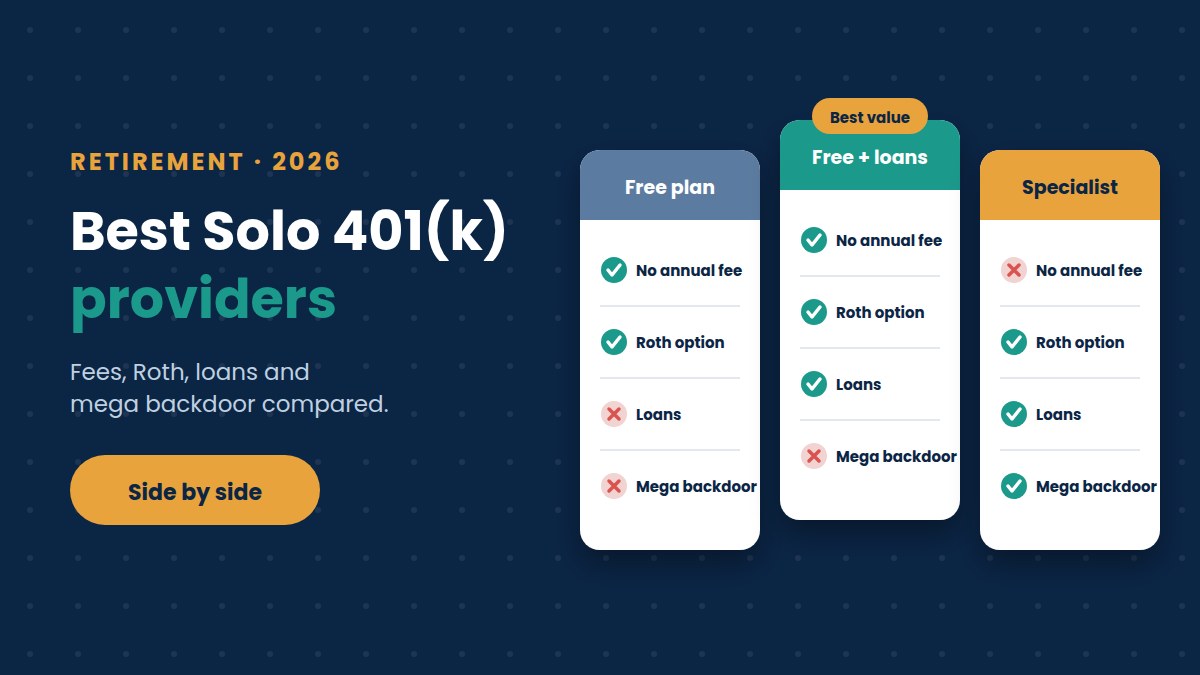
Best Solo 401(k) providers compared: three plan cards checking annual fees, Roth option, loans and mega backdoor Roth

For most freelancers, the best Solo 401(k) providers are the big brokerages: Fidelity, E*TRADE and Charles Schwab. All three charge no setup or annual fee, offer Roth contributions and let you trade stocks and ETFs commission-free. E*TRADE stands out because it also allows loans. If you earn a lot and want to save beyond the … Read more

How to Pay Estimated Taxes Online With IRS Direct Pay

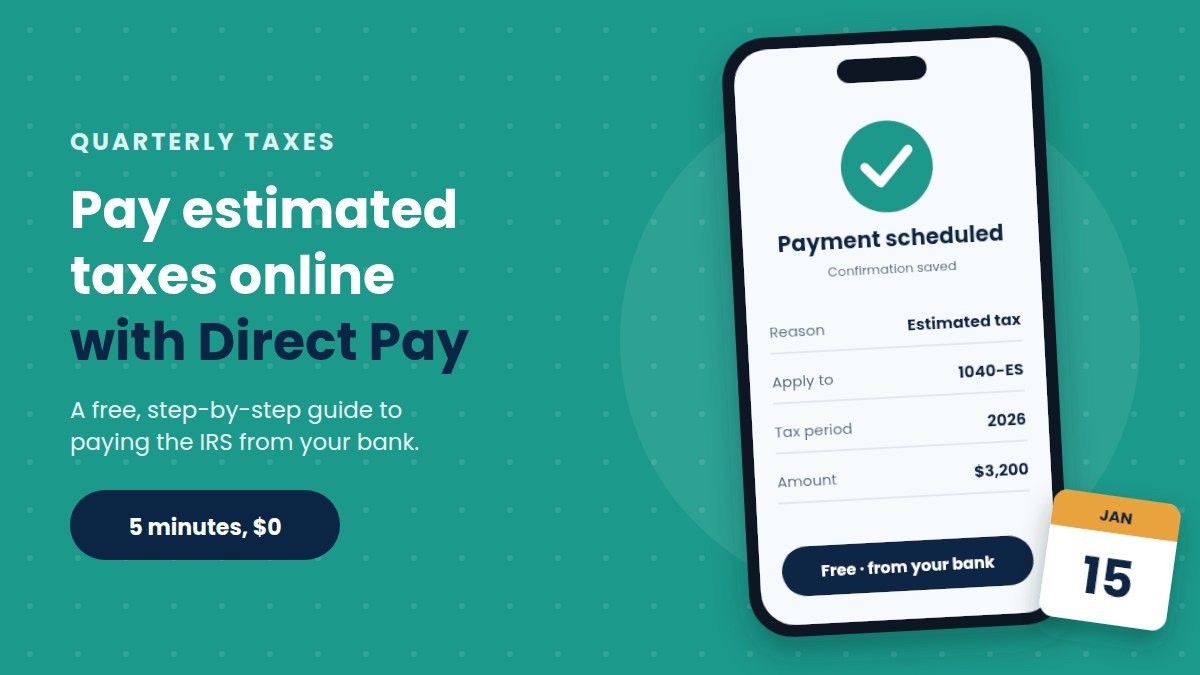
Pay estimated taxes online with IRS Direct Pay: a phone showing a scheduled 1040-ES payment for 2026 next to a January 15 calendar date

The easiest way to pay estimated taxes online is IRS Direct Pay. It’s free, takes about five minutes and pulls the money straight from your bank account. You don’t need to create an account, and you can schedule a payment up to 365 days ahead. This guide shows the exact steps, the other online options … Read more

HSA for Self-Employed: The Triple Tax Benefit Explained

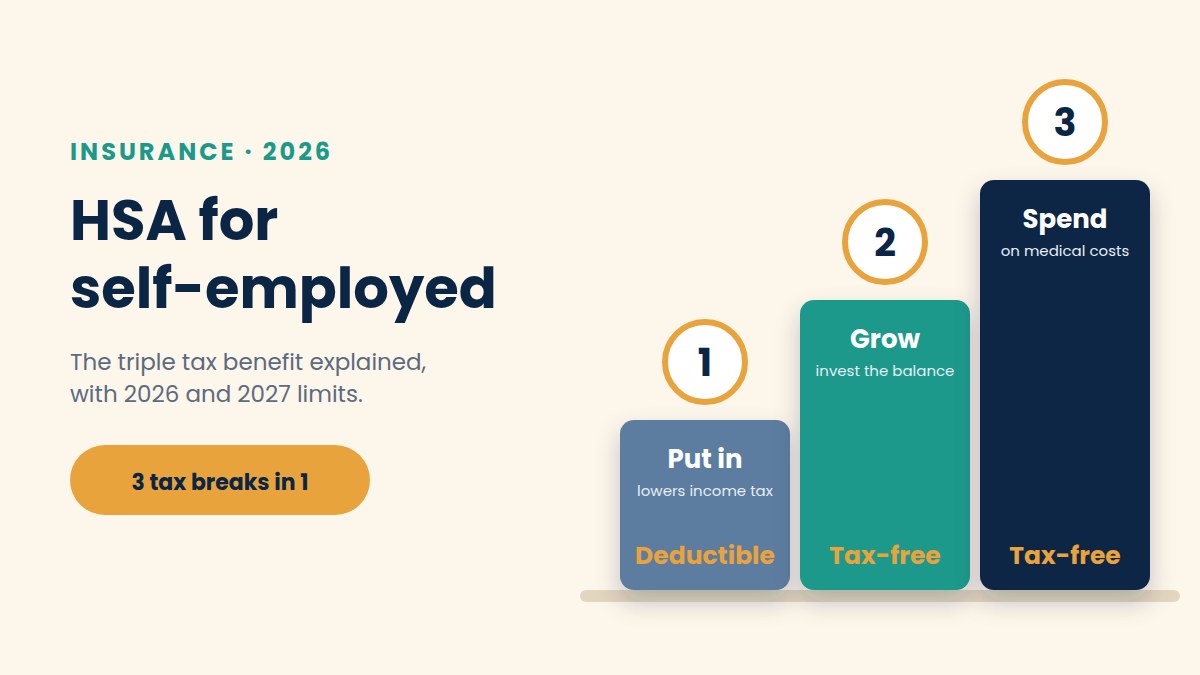
HSA for self-employed: three rising steps showing the triple tax benefit, deductible money in, tax-free growth and tax-free spending on medical costs

An HSA for self-employed people is a savings account for medical costs with a rare triple tax benefit. You can open one if you have a high-deductible health plan, even without an employer. In 2026, you can put in up to $4,400 with self-only coverage or $8,750 with family coverage. It pairs naturally with the … Read more

Solo 401(k) Contribution Limits 2026 Explained With Examples

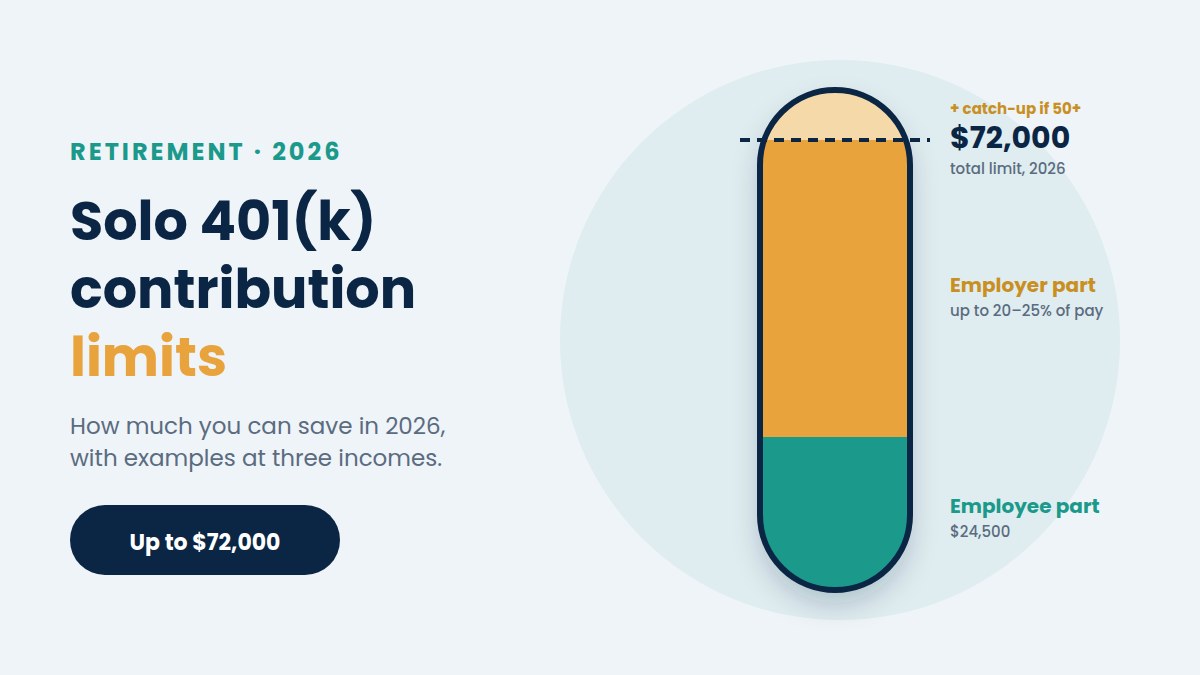
Solo 401(k) contribution limits for 2026: a gauge filled with a $24,500 employee part and an employer part up to the $72,000 total limit

The Solo 401(k) contribution limits for 2026 let you save up to $72,000, or more if you’re 50 or older. That total has two parts. As the “employee,” you can put in up to $24,500. As the “employer,” your business can add up to 20% of your net self-employment earnings. Because you wear both hats, … Read more