Solo 401(k) Contribution Limits 2026 Explained With Examples
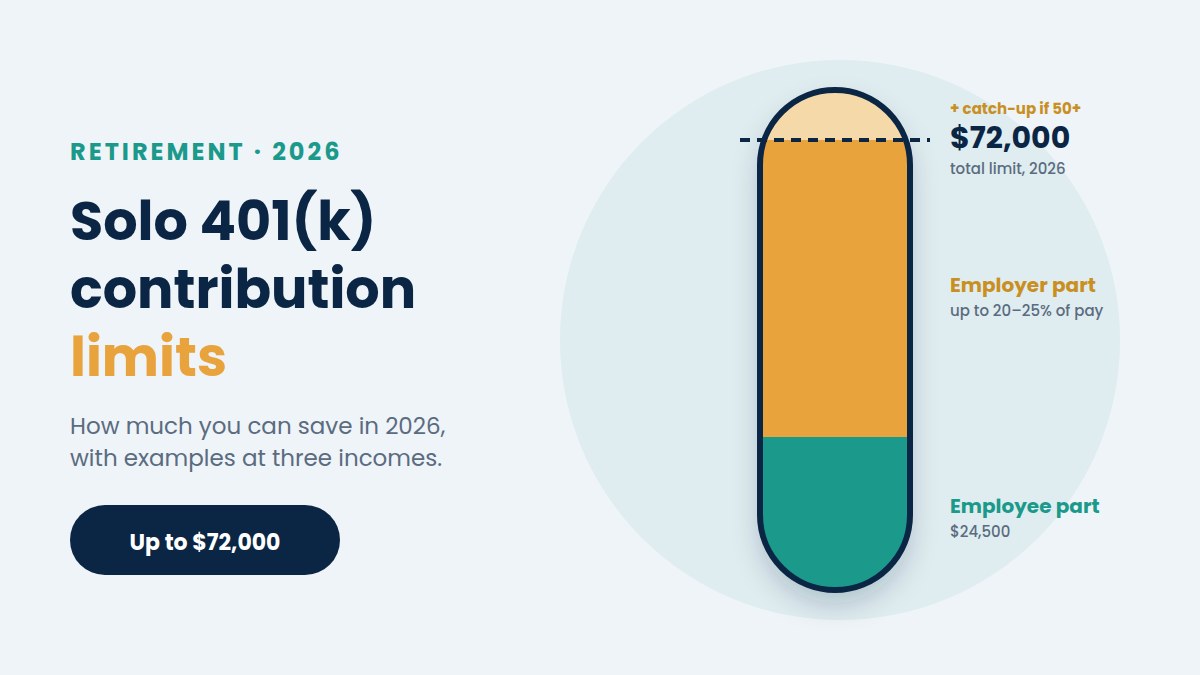
Solo 401(k) contribution limits for 2026: a gauge filled with a $24,500 employee part and an employer part up to the $72,000 total limit

The Solo 401(k) contribution limits for 2026 let you save up to $72,000, or more if you’re 50 or older. That total has two parts. As the “employee,” you can put in up to $24,500. As the “employer,” your business can add up to 20% of your net self-employment earnings. Because you wear both hats, … Read more
The QBI Deduction for Freelancers: Who Qualifies and How Much It Saves

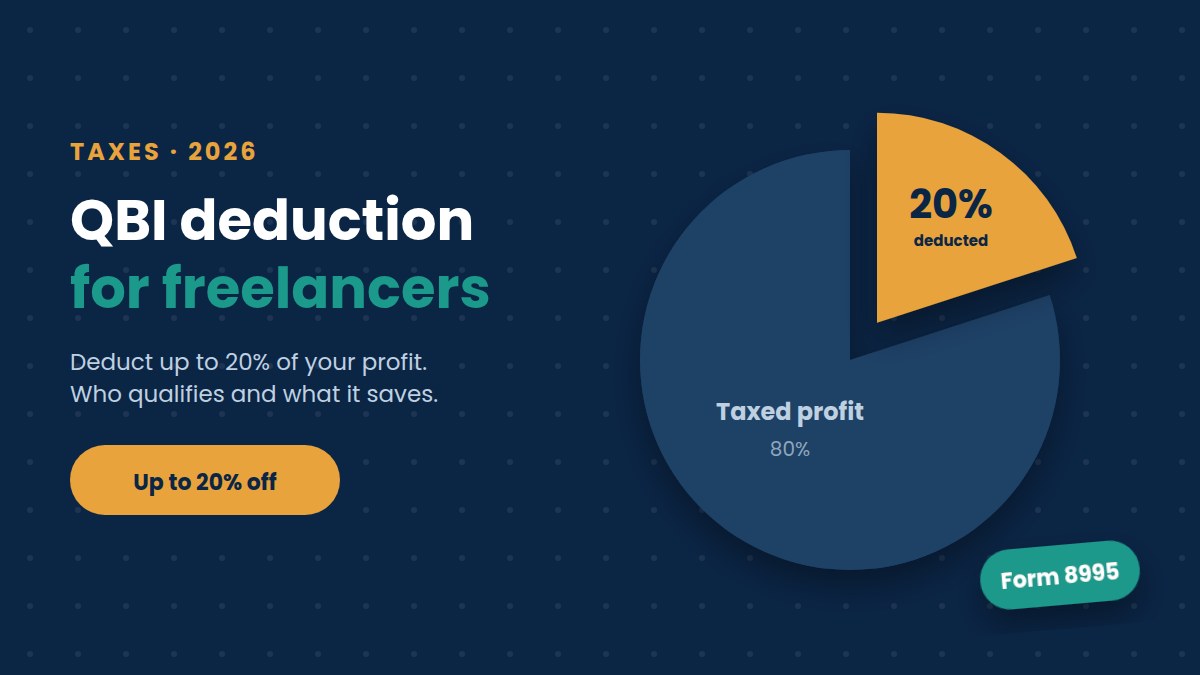
QBI deduction for freelancers: a profit pie chart with a 20% slice pulled out as the deducted part

The QBI deduction for freelancers lets most self-employed people deduct up to 20% of their business profit from their taxable income. You don’t need to itemize, and you don’t need to spend any money to get it. Since a 2025 law made it permanent, it will stay available in 2026 and beyond. The IRS calls … Read more

When Should a Freelancer Become an S-Corp? The Income Break-Even Point

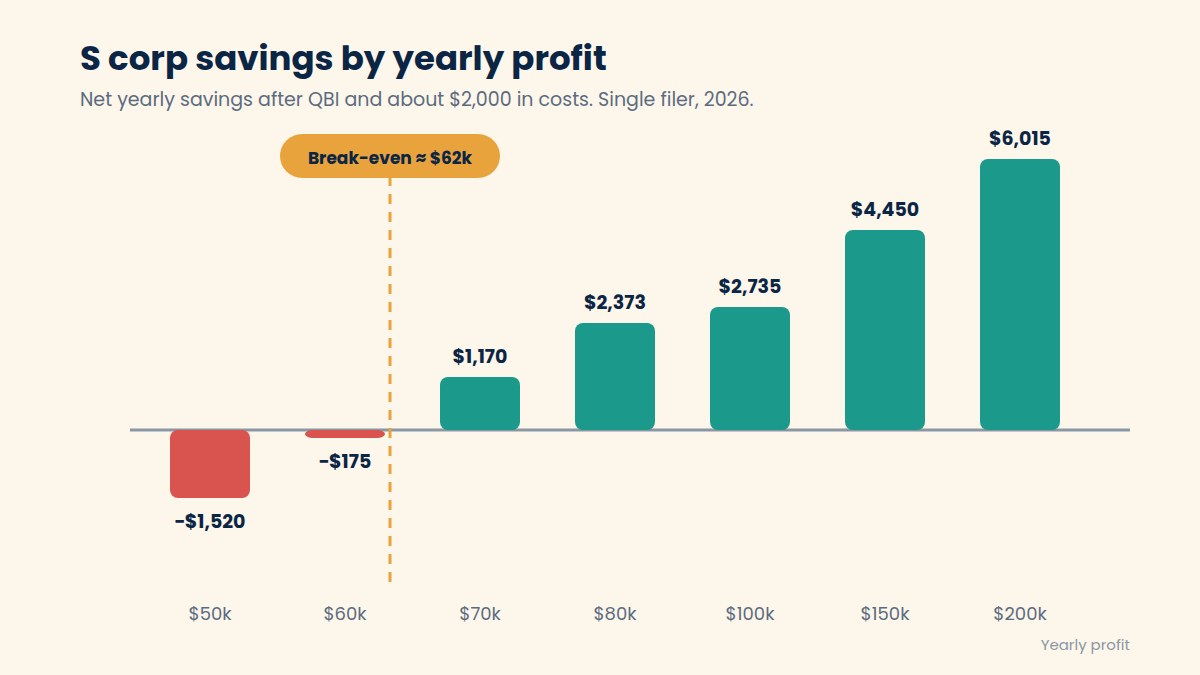
S corp net savings by yearly profit in 2026, from a $1,520 loss at $50,000 to $6,015 saved at $200,000

When to become an S corp depends on one number: your yearly profit. For most single freelancers in 2026, the S corp election starts to pay off at about $60,000 to $65,000 of profit. Below that, the extra costs usually eat the savings. Above it, the savings grow steadily, from about $1,000 a year at … Read more

LLC vs Sole Proprietor for Freelancers: Taxes, Liability and Costs

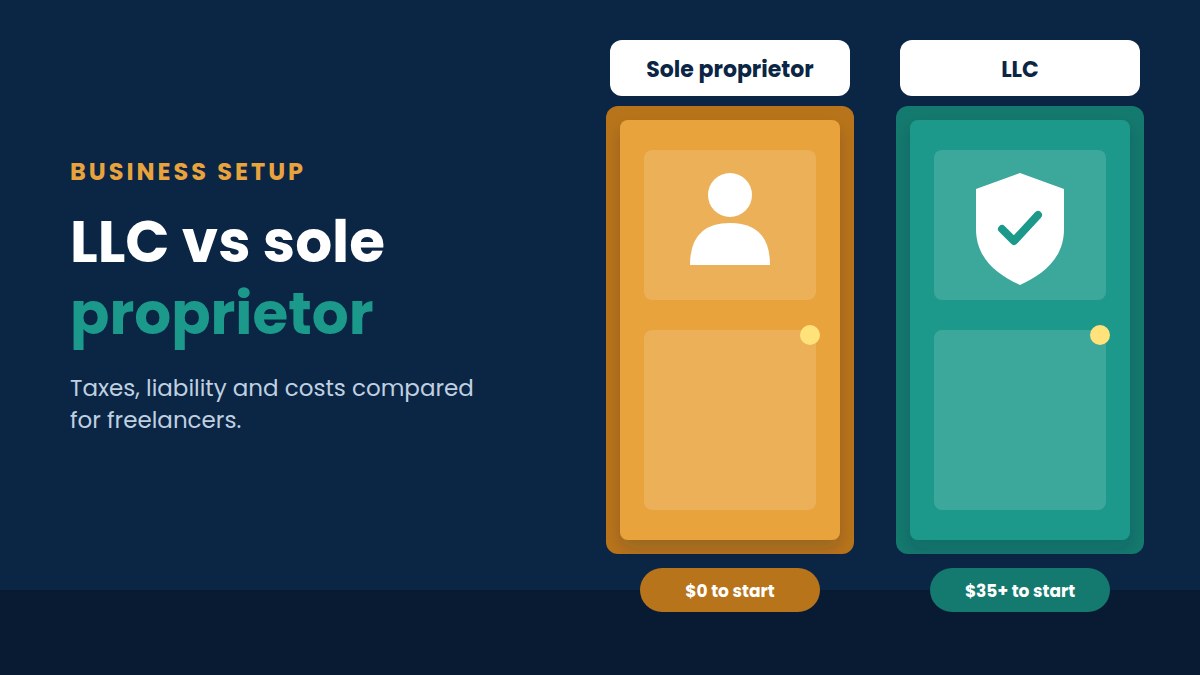
LLC vs sole proprietor: two doors, a sole proprietorship that costs $0 to start and an LLC with liability protection

LLC vs sole proprietor is the first big decision most freelancers face. The honest answer surprises many people: by default, both pay exactly the same taxes. The real differences are liability protection, cost and paperwork. In other words, you are mainly paying for a legal wall between your business and your personal assets. For most … Read more