Deducting Software, Subscriptions and Equipment (Section 179 Basics)
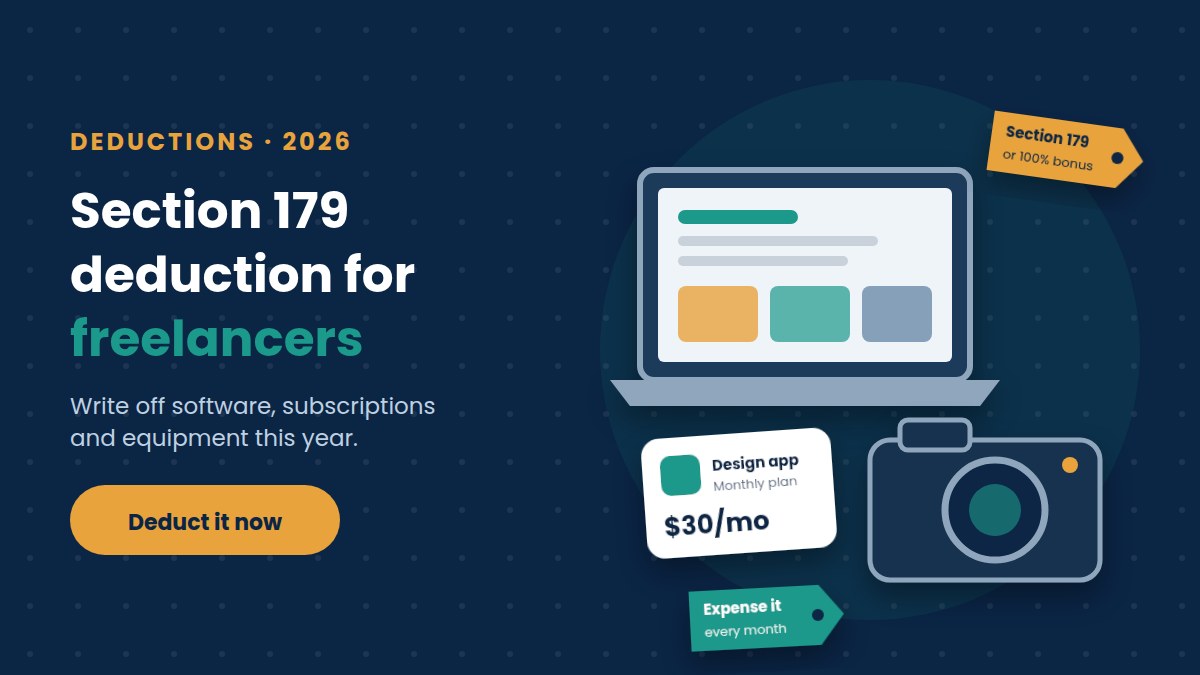
Section 179 deduction for freelancers: a laptop and camera tagged for Section 179 or bonus depreciation, and a $30 monthly app subscription tagged as an expense

The Section 179 deduction for freelancers lets you write off the full cost of business equipment in the year you start using it, instead of spreading it over several years. Software subscriptions are even simpler: they’re ordinary expenses you deduct as you pay them. And items up to $2,500 each can usually be deducted right … Read more
Self-Employed Health Insurance Deduction Explained

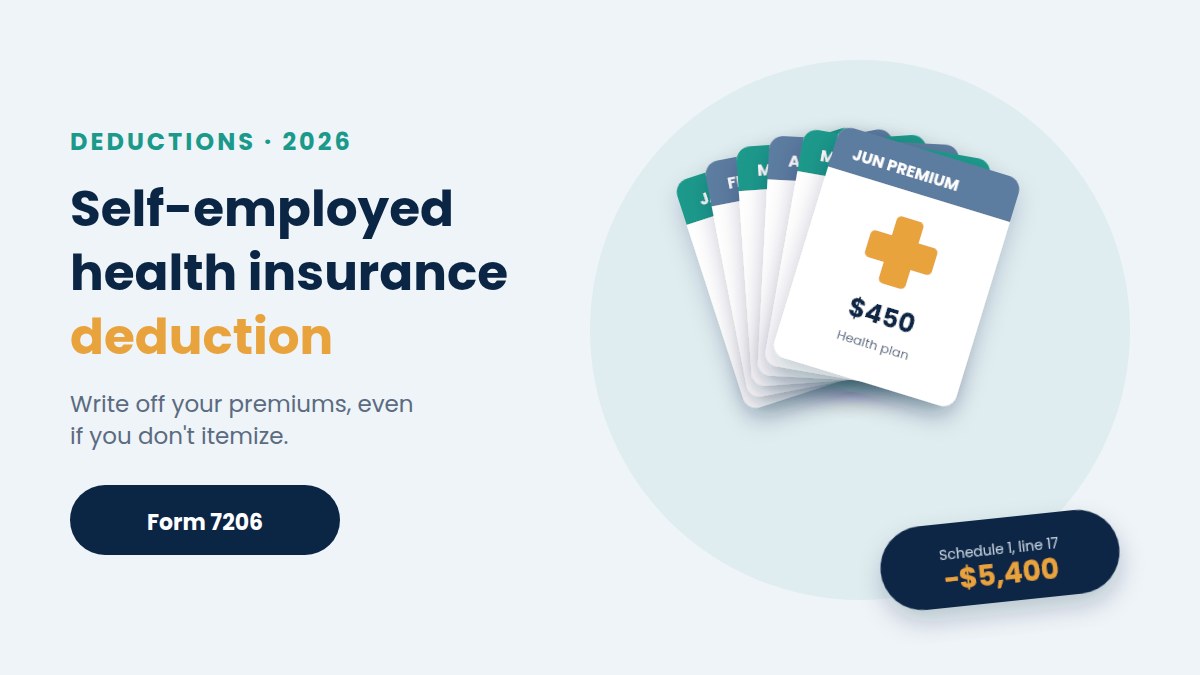
Self-employed health insurance deduction: a fan of $450 monthly premium bills and a $5,400 deduction on Schedule 1, line 17

The self-employed health insurance deduction lets you subtract the health insurance premiums you pay from your income. You take it on Schedule 1 of your Form 1040, so you get it even if you don’t itemize. It’s one of the most valuable freelancer tax deductions, because health coverage is often a freelancer’s biggest monthly bill. … Read more

HSA for Self-Employed: The Triple Tax Benefit Explained

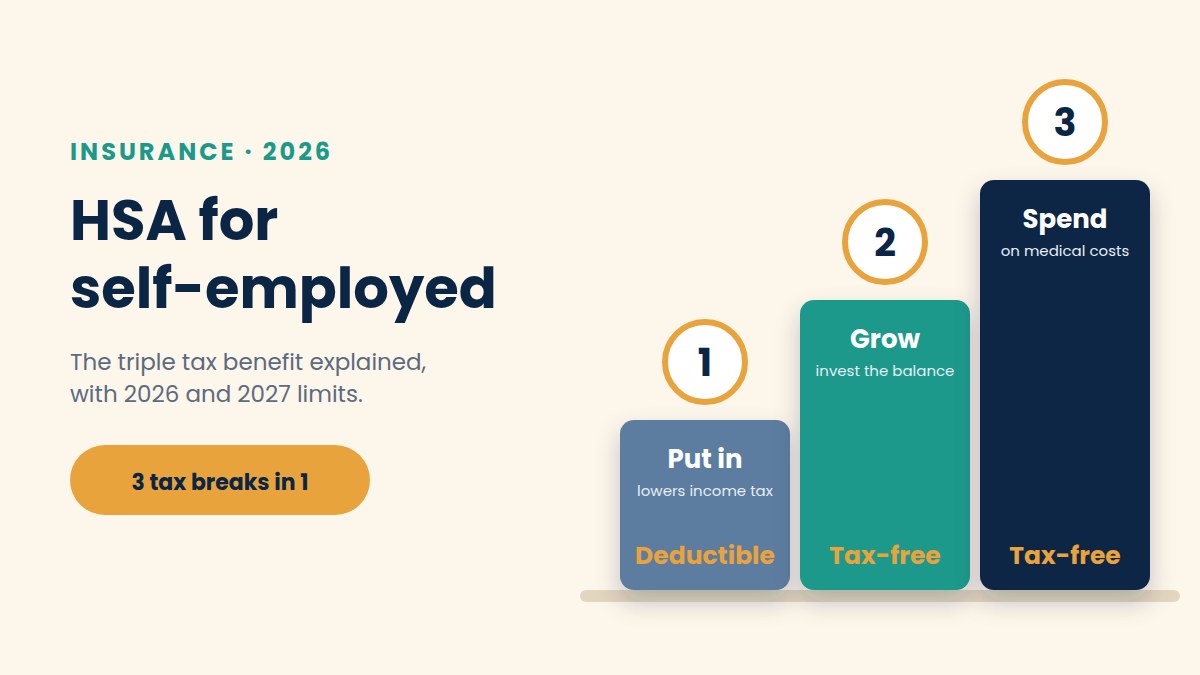
HSA for self-employed: three rising steps showing the triple tax benefit, deductible money in, tax-free growth and tax-free spending on medical costs

An HSA for self-employed people is a savings account for medical costs with a rare triple tax benefit. You can open one if you have a high-deductible health plan, even without an employer. In 2026, you can put in up to $4,400 with self-only coverage or $8,750 with family coverage. It pairs naturally with the … Read more

The QBI Deduction for Freelancers: Who Qualifies and How Much It Saves

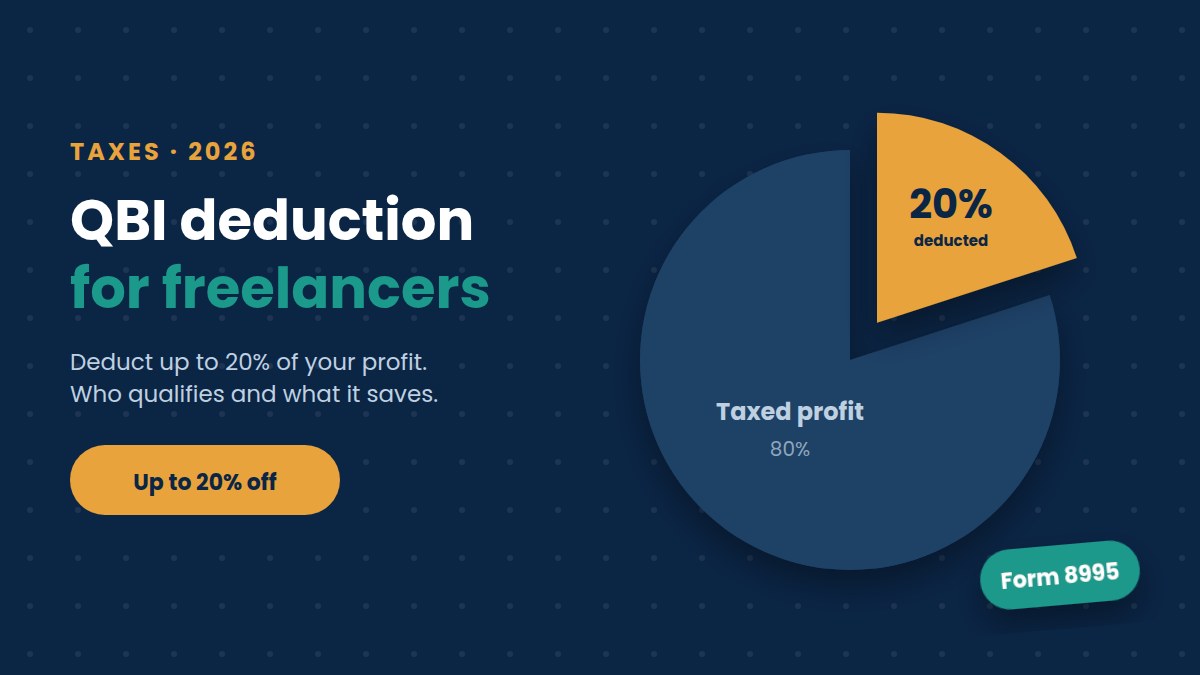
QBI deduction for freelancers: a profit pie chart with a 20% slice pulled out as the deducted part

The QBI deduction for freelancers lets most self-employed people deduct up to 20% of their business profit from their taxable income. You don’t need to itemize, and you don’t need to spend any money to get it. Since a 2025 law made it permanent, it will stay available in 2026 and beyond. The IRS calls … Read more

Retirement Plans for Self-Employed: SEP IRA vs Solo 401(k) vs Roth IRA

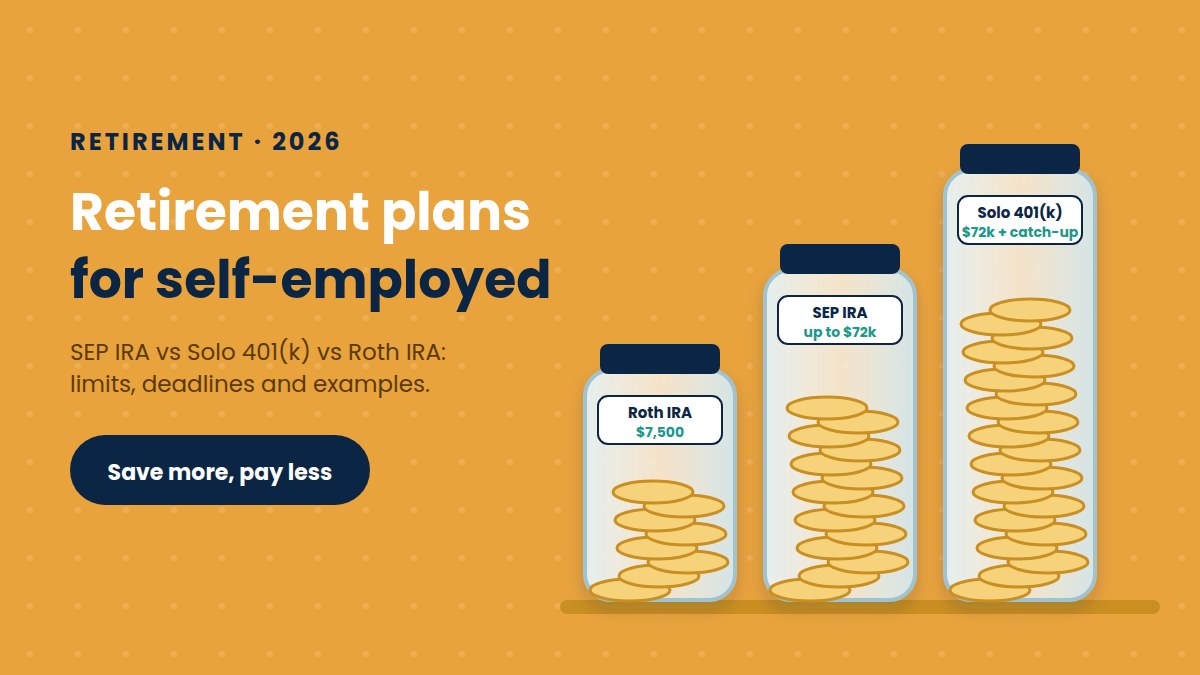
Retirement plans for self-employed: three savings jars comparing the Roth IRA, SEP IRA and Solo 401(k) limits

Retirement plans for self-employed workers let you save far more than most employees can, and cut your taxes at the same time. The three main options are the SEP IRA, the Solo 401(k) and the Roth IRA. For most freelancers with no employees, a Solo 401(k) allows the biggest contributions. A SEP IRA is the … Read more

Tax Deductions for Uber and Lyft Drivers: 2026 Guide

Tax deductions for Uber drivers: a rideshare car driving through the city at night under a dollar map pin

Tax deductions for Uber drivers can cut your taxable profit by more than half. Mileage is the big one, but app fees, your phone, tolls and supplies count too. Lyft drivers follow exactly the same rules. In other words, everything on this page applies to both apps. As a rideshare driver, you are self-employed, not … Read more

Tax Deductions for Photographers

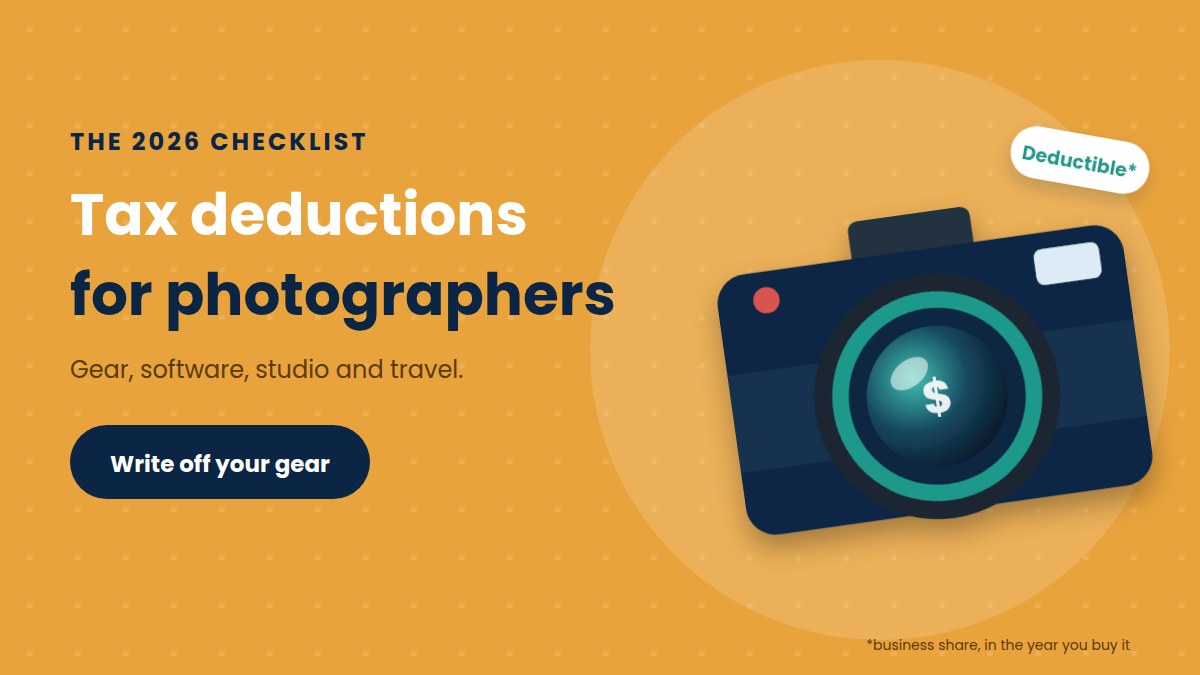
Tax deductions for photographers: a camera with the 2026 checklist of gear, software, studio and travel write-offs

Tax deductions for photographers cover almost everything your business needs: cameras, lenses, lighting, editing software, studio space, travel and marketing. If you shoot as a freelancer, you report these costs on Schedule C. As a result, every dollar you deduct lowers both your income tax and your 15.3% self-employment tax. The rule behind every deduction … Read more

Car Expenses for Self-Employed: Standard Mileage vs Actual Expenses

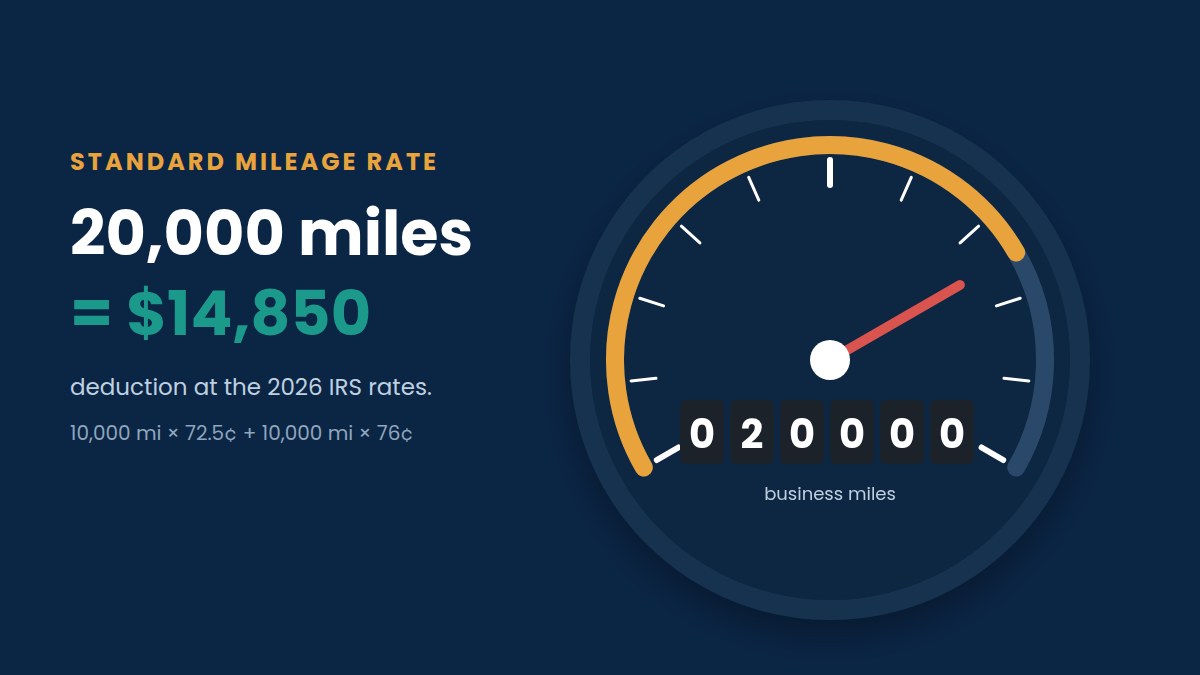
Odometer showing 20,000 business miles, worth $14,850 with the 2026 standard mileage rate

Standard mileage vs actual expenses is the choice of how you deduct a car you use for work. In fact, it’s one of the biggest freelancer tax deductions for anyone who drives for business. So the right pick can be worth thousands of dollars a year. Also, parking and tolls for business trips are deductible … Read more

Can You Deduct Your Phone and Internet Bill as a Freelancer?

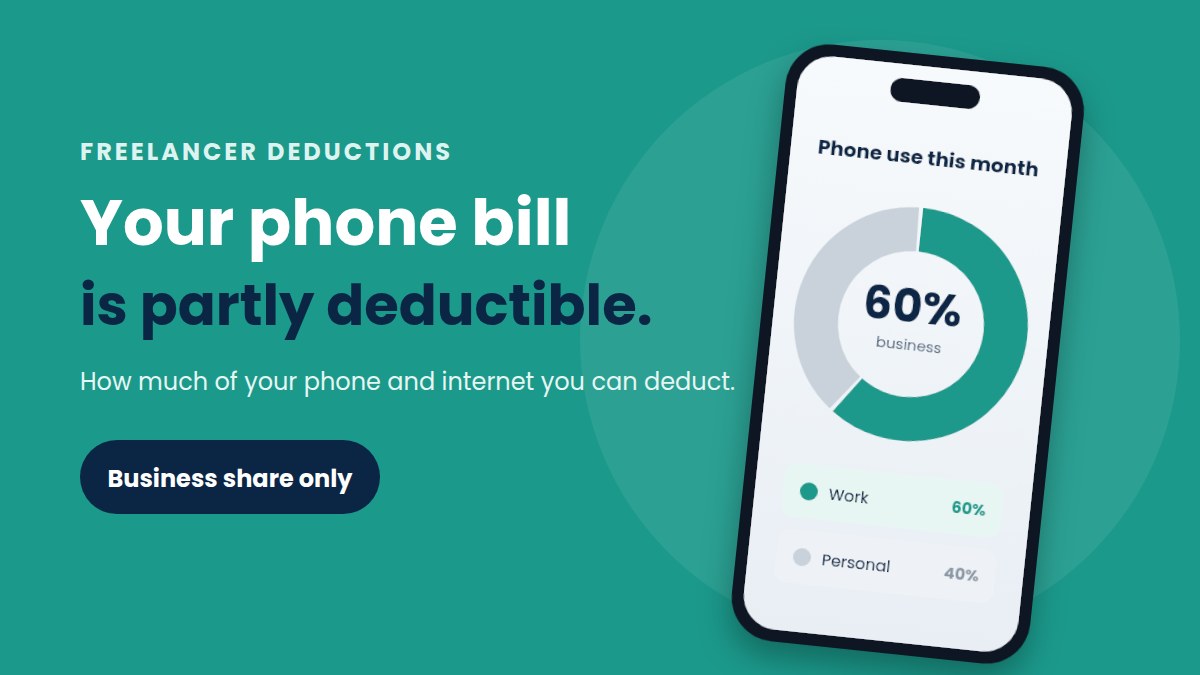
Phone and internet deduction: a phone screen split into 60% business and 40% personal use

Yes, freelancers can deduct their phone and internet, but only the part used for business. The phone and internet deduction is one of the easiest freelancer tax deductions to claim, and one of the most often missed. The key is a reasonable, documented percentage. Below you’ll see what counts, how to calculate your share, and … Read more

Home Office Deduction: Simplified vs Regular Method

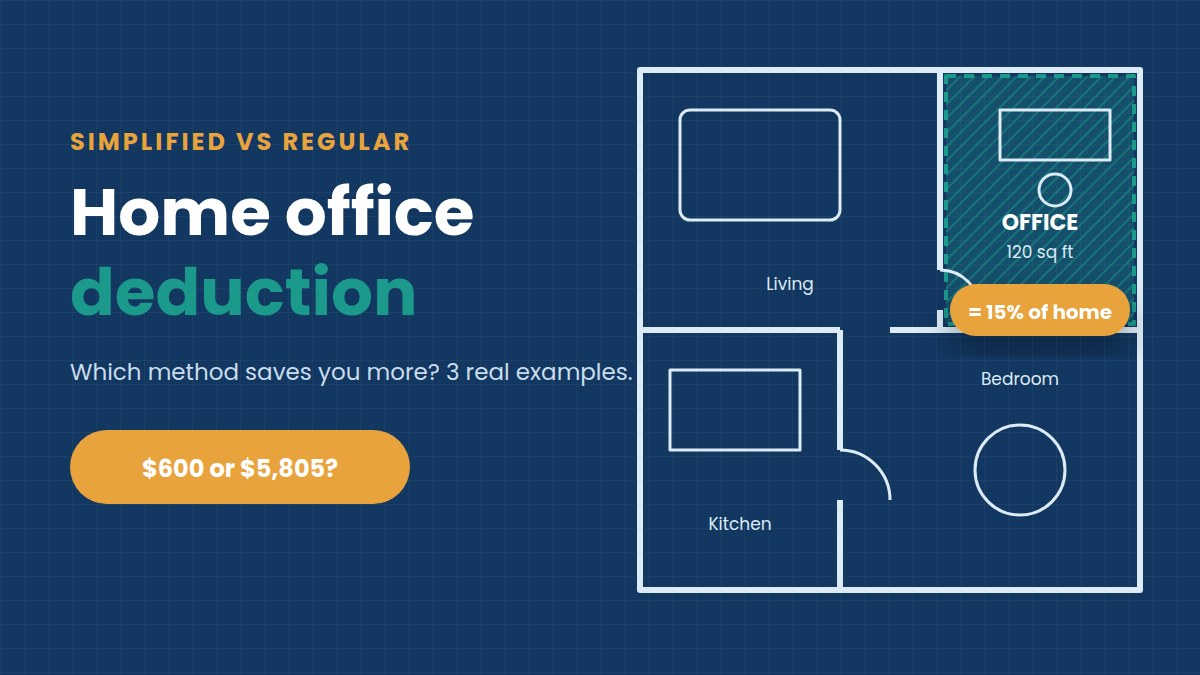
Home office deduction floor plan: a 120 sq ft office is 15% of an 800 sq ft apartment

The home office deduction lets freelancers deduct part of their housing costs when they work from home. You can calculate it in two ways, and picking the right one can be worth thousands of dollars a year. The home office is one of the most valuable freelancer tax deductions, because it lowers both your income … Read more